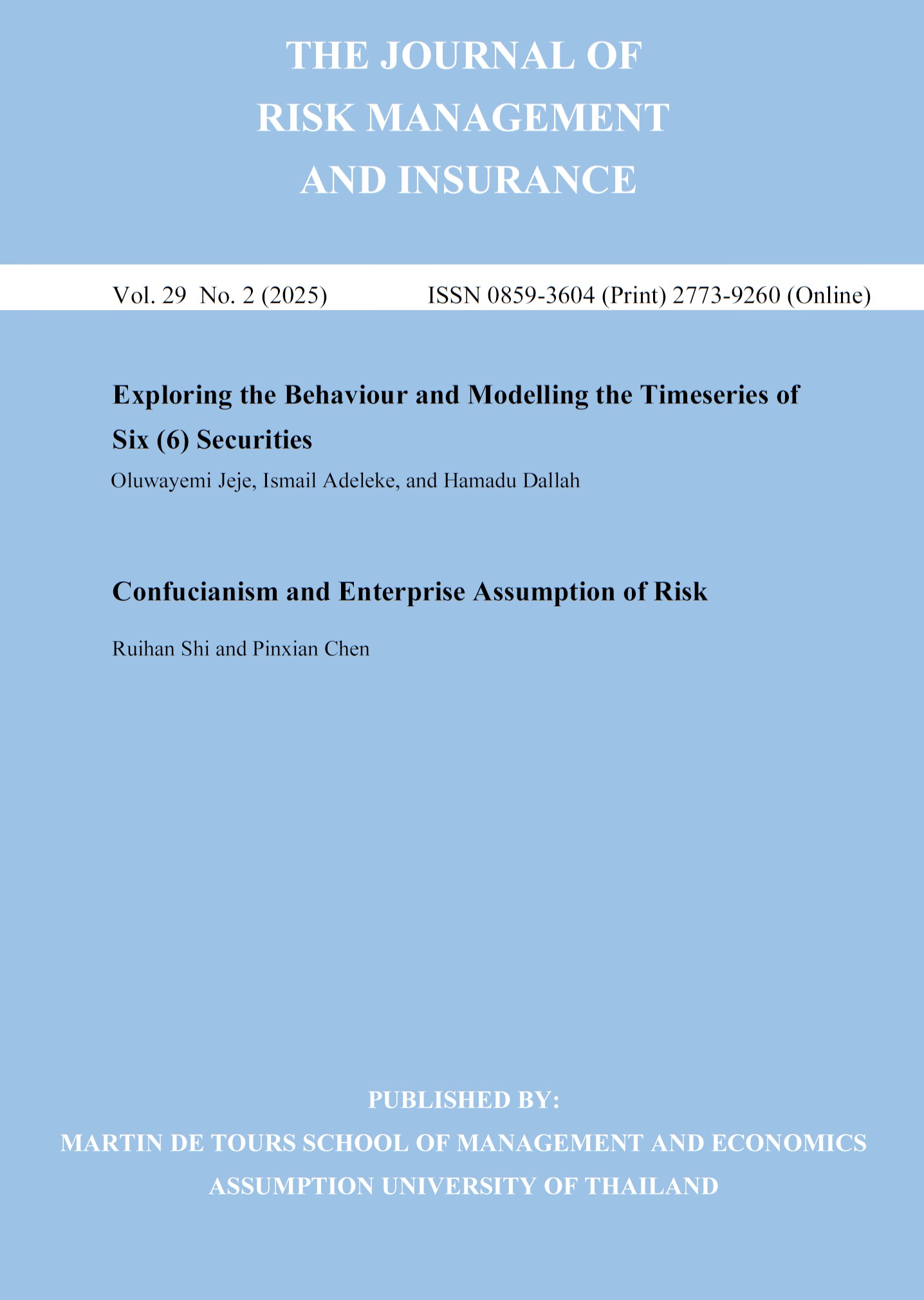
Confucianism and Enterprise Assumption of Risk
Keywords:
Confucianism, Corporate Executives, Number of Confucian Temples, Enterprise Assumption of Risk, Cultural EconomicsAbstract
Corporate risk-taking is a key factor in corporate decision-making, and in recent years, the influence of cultural factors as informal institutions on corporate decisions has attracted widespread attention from scholars. Confucian culture, which upholds core values such as benevolence and righteousness, forgiveness and tolerance, integrity, and loyalty and filial piety, has long permeated various levels of Chinese society. Using non-financial listed firms in China as the sample, this study measures the strength of Confucian cultural influence by the number of Confucian temples within varying distances around each firm and further explores the impact of Confucian culture on corporate risk-taking. The results show that Confucian culture is negatively associated with corporate risk-taking, indicating that in regions where Confucian culture is more deeply rooted, firms tend to exhibit lower levels of risk-taking. This study provides an in-depth empirical analysis of the factors influencing corporate risk-taking and the role of cultural factors, offering important guidance for corporate strategic development and risk management strategies while contributing to a deeper and more comprehensive understanding of the critical role of cultural factors, such as Confucian culture, in risk-taking decisions.
Downloads
Published
Issue
Section
License
Upon acceptance, the author(s) agree to transfer the copyright to their work to the Assumption University of Thailand, which owns the journal, royalty-free, for the sole purpose of academic publishing. The author(s) retain the right to self-archive the published paper, print copies for their personal use provided they will not be sold commercially, and use it for their future work provided the published article is properly cited.